The Decade Shift: Income Over Ownership
For years, wealth in real estate was measured by how many properties you owned. The next decade will reward those who own the most income-generating ones.
Key Takeaways
- Wealth in real estate used to be measured by how many properties you owned — that yardstick is breaking down.
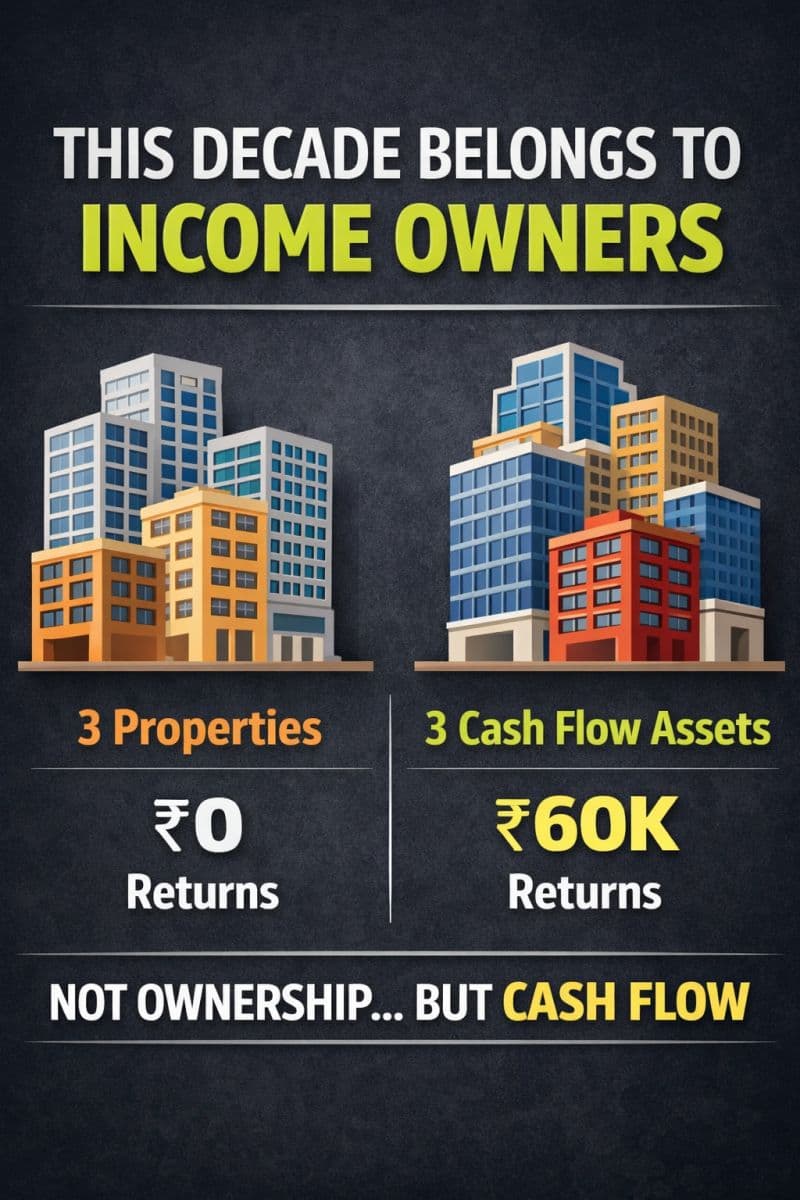
- Three ₹40–50 lakh income assets can out-earn a single ₹1 crore property while spreading risk and improving liquidity.
- Expensive capital and a premium on liquidity have made monthly cash flow more valuable than distant appreciation.
- The investors who win this decade will be those whose properties pay them every month, not those who simply own the most.
For years, wealth in real estate was measured by one simple number: the count of properties you owned. The more doors on your name, the wealthier you were assumed to be. It was a clean, satisfying way to keep score — and for a long time it broadly worked.
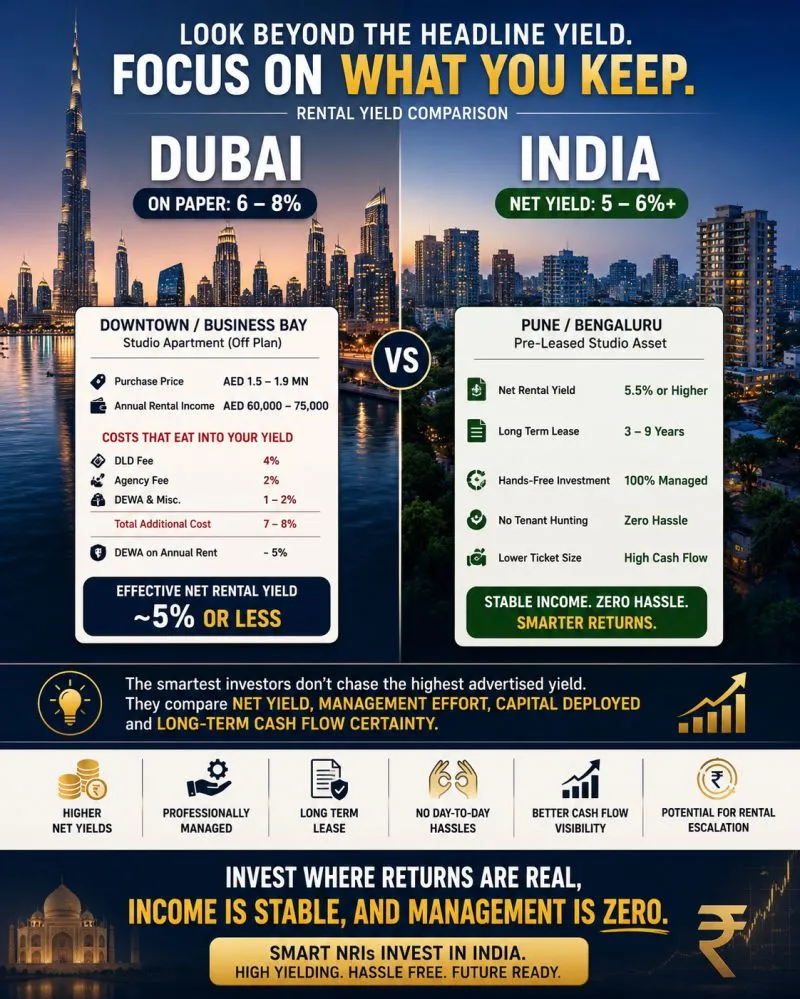
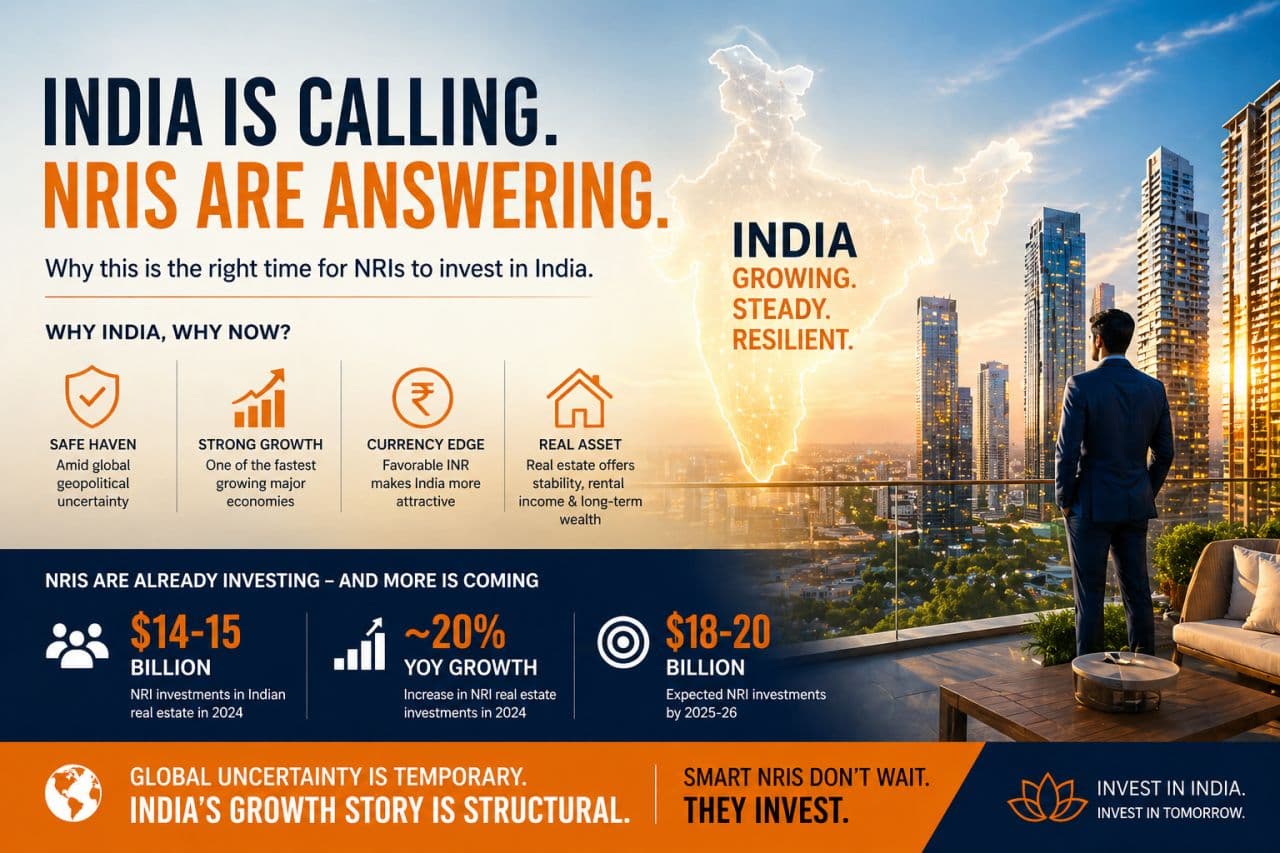
That era is quietly ending. Capital is more expensive than it has been in years, liquidity has become a feature people are willing to pay for, and cash flow now matters far more than the promise of appreciation somewhere down the line. The scoreboard is changing, even if many investors have not noticed yet.
The New Game: Income Over Ownership
Consider two ways to deploy the same pool of capital — one large trophy asset, or several smaller income-producing ones.
| Metric | One ₹1 Cr property | Three ₹40–50 L assets |
|---|---|---|
| Number of assets | 1 | 3 |
| Combined monthly income | ₹25,000 | ₹60,000–70,000 |
| Liquidity | Low | Higher |
| Risk concentration | High (single asset) | Diversified |
On paper the single property looks more impressive at a dinner-table conversation. But which one actually builds security? The diversified set earns more than twice the monthly income, survives a vacancy without collapsing, and can be partly sold down if life demands liquidity. Ownership for its own sake is a vanity metric; income is the real one.
What Smart Investors Chase Now
The most sophisticated investors have quietly stopped chasing:
- Size for its own sake
- Location hype and launch-day frenzy
- Appreciation stories that rely on someone else paying more later
Instead, they pursue:
- Yield — real, measurable returns you can underwrite today
- Cash flow — money that lands in the account every month
- Predictability — income that does not depend on speculation or perfect timing
Why the Shift Is Structural, Not a Fad
This is not a passing mood. Higher borrowing costs make idle, low-yield capital genuinely painful to hold. A more mobile workforce and the normalisation of flexible living have created durable rental demand. And a generation that watched markets swing violently has learned to value steady income over speculative upside. Each of these forces is long-term — together they make the move toward income-led real estate a one-way door.
Real Estate as a Financial Instrument
Property is no longer just an asset to hold and admire — it is becoming a financial instrument engineered to produce income, much like a bond or a dividend stock. The right question is shifting from what might this be worth in ten years? to what does this pay me, reliably, today?
Over the next ten years, wealth will not belong to those who own the most property — but to those whose properties pay them every month.